
This is where ideas turn into physical objects.
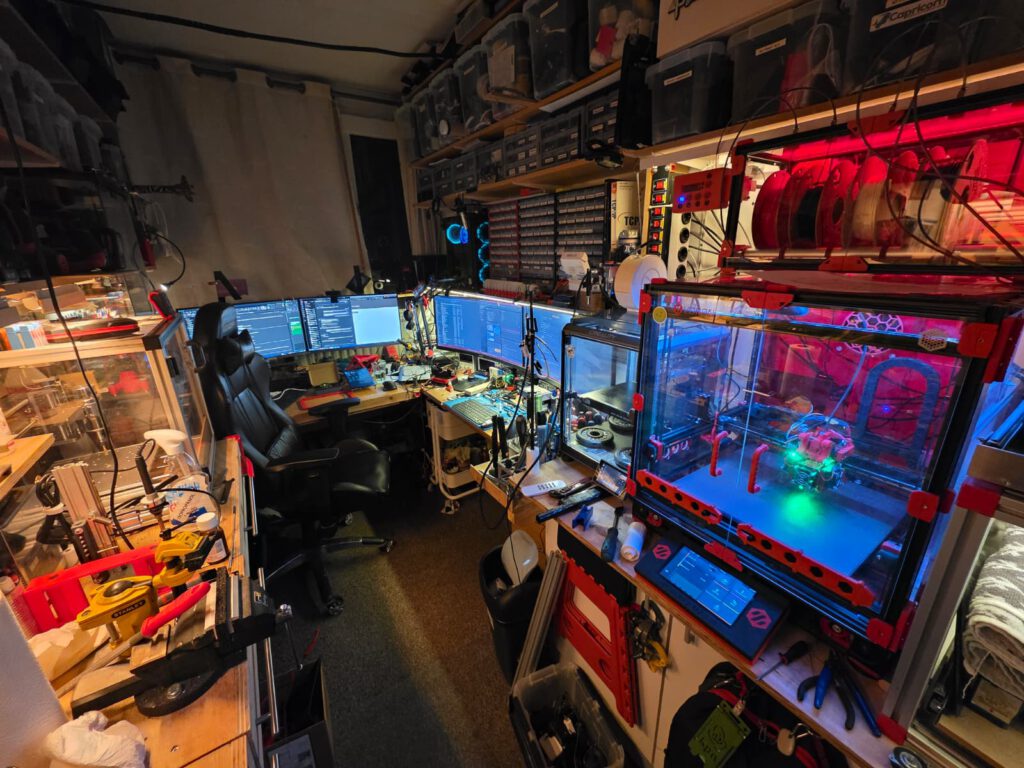
My makerspace is a compact 9 m² (4.30 × 2.10 m) room, packed wall-to-wall with tools, machines, and parts. Every square centimeter is used with intent — organized chaos at its finest. It’s tight, but everything I need is within arm’s reach.
Designed for Flow
This space isn’t just filled — it’s engineered.
Everything is positioned for efficiency: minimal movement, maximum output. Whether I’m designing, printing, soldering, or debugging, I can switch contexts in seconds without leaving my chair.
Power for design and programming
Left Brain Meets Right Brain
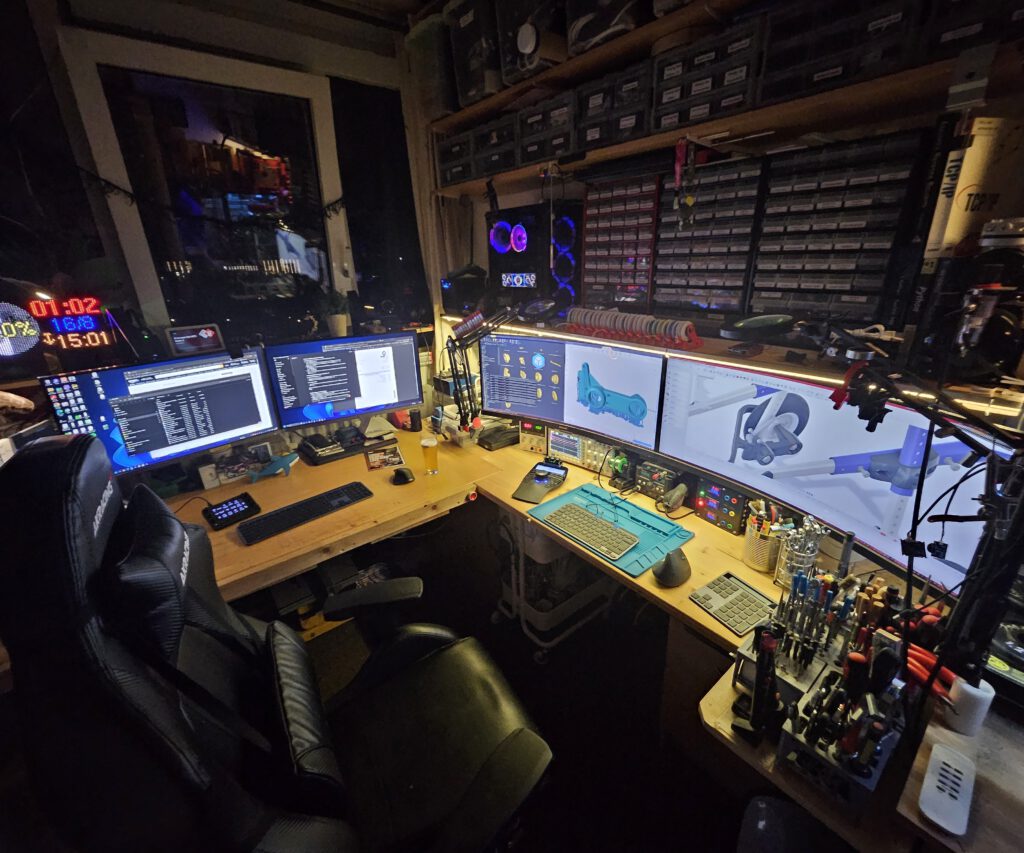
Left side: work. <–|–> Right side: hobby.
In reality, those lines blur sometimes. Engineering, coding, and creativity all collide here — usually somewhere around midnight.
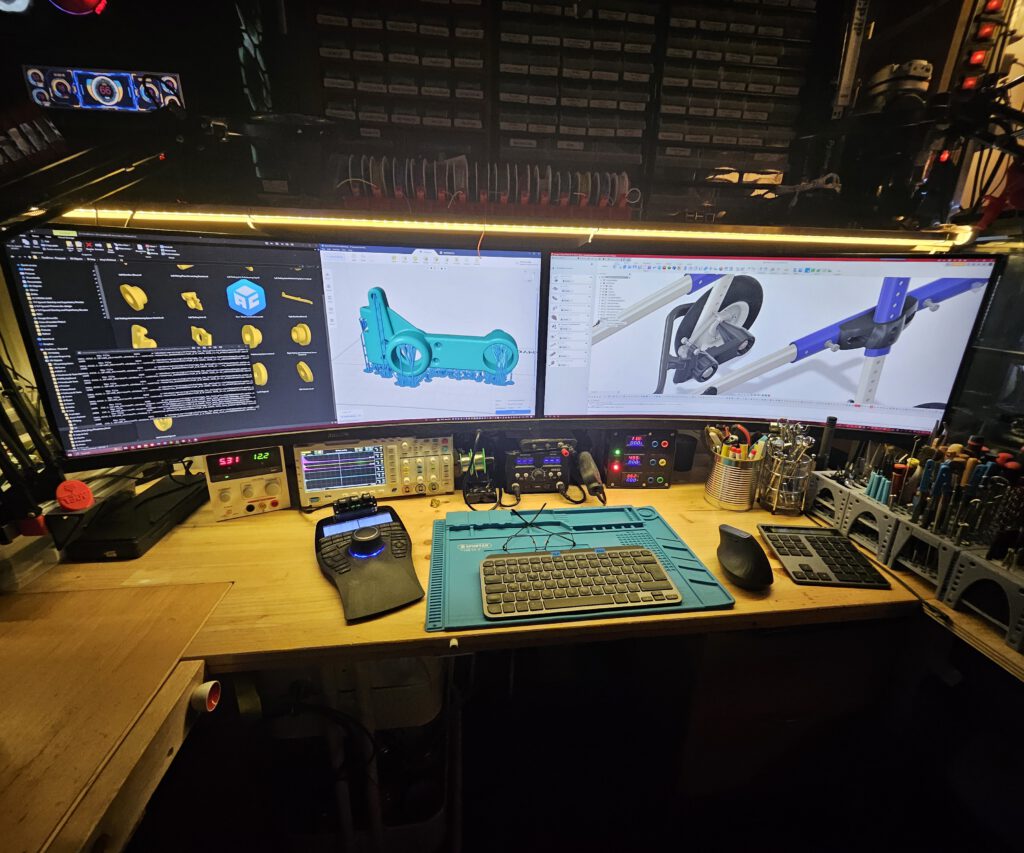
Code Behind the Machines
Not everything here is visible.
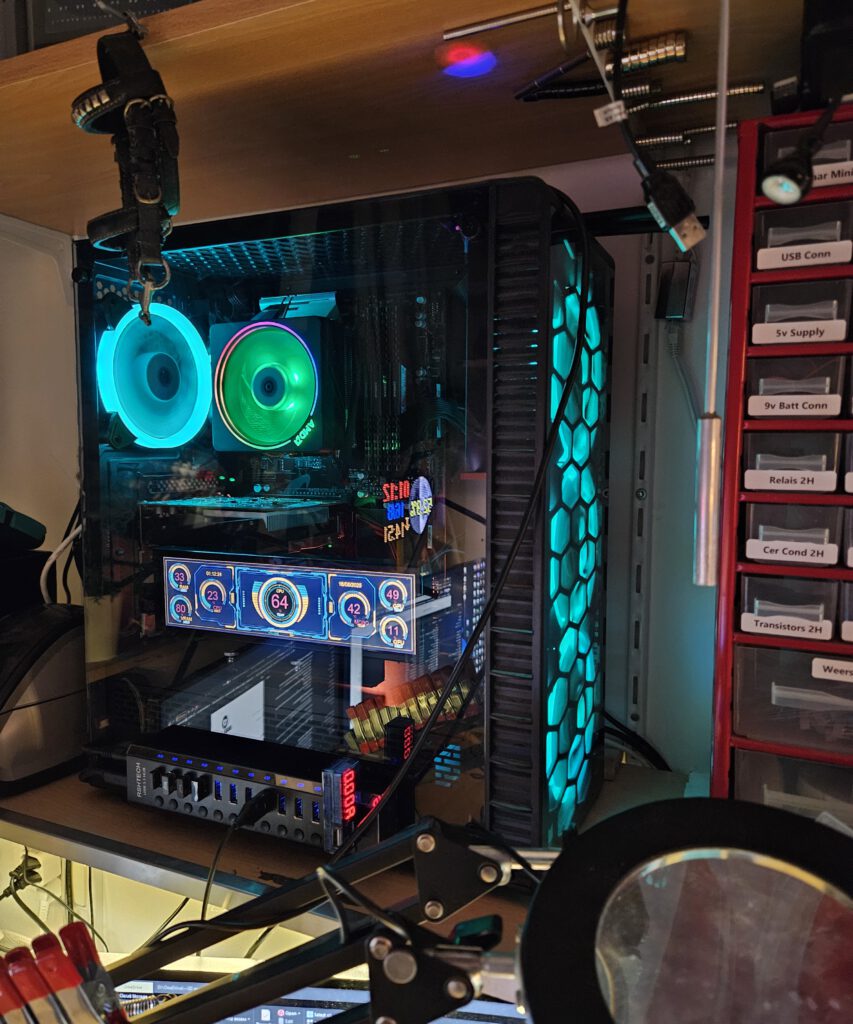
Behind the scenes, Raspberry Pi systems, custom scripts, and automation tie everything together. From controlling printers and sensors to running Home Assistant and a local AI — software is what turns hardware into something truly powerful.
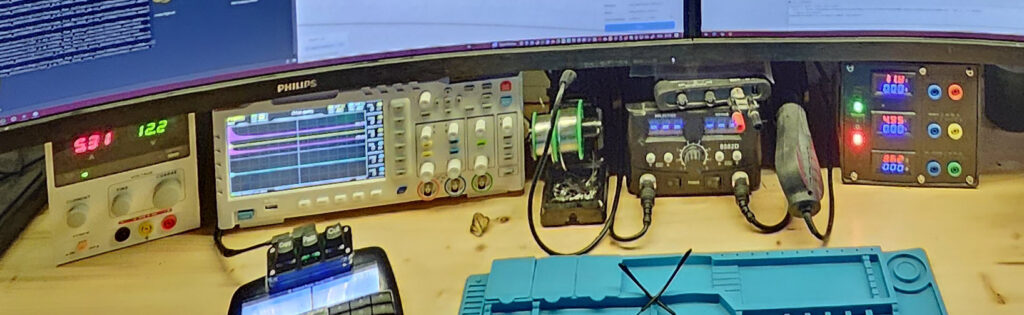
Electronics Lab
No serious making without electrons.
Oscilloscopes, lab power supplies, signal generators, and precision tools make this the place where circuits come alive. From quick fixes to full custom builds — this is where ideas get their nervous system.
3D Printing
This is the heart of the makerspace.
The front printer (Creality K1C) is tuned for speed and rapid iteration, now equipped with a 4-color system. Behind it sits my custom-built Voron 2.4 — larger, more precise, and continuously evolving. The machines on the right are dedicated SLA printers for high-detail work.
Different tools, different strengths — same goal: turning ideas into reality.
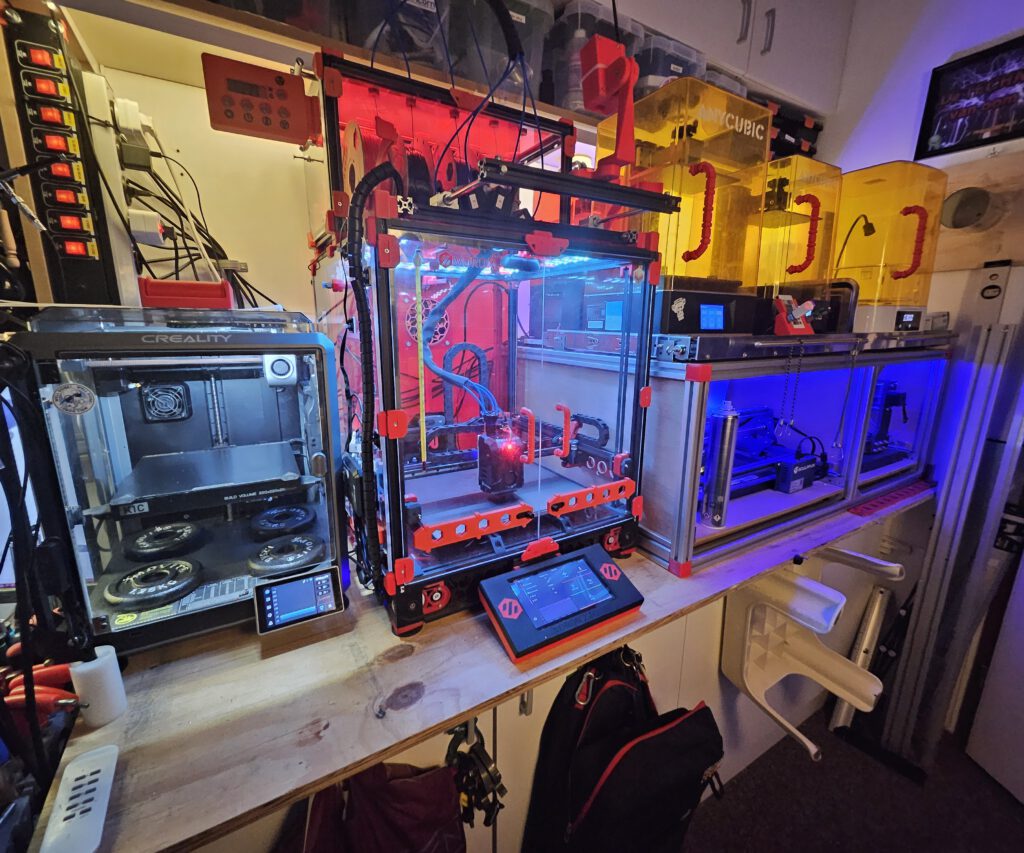
Print Farm Mode: Always On
From fast prototyping to high-detail resin prints, this setup covers the full spectrum.
Multiple machines run in parallel, each with its own purpose. If something can be printed, tested, and improved — it happens here.
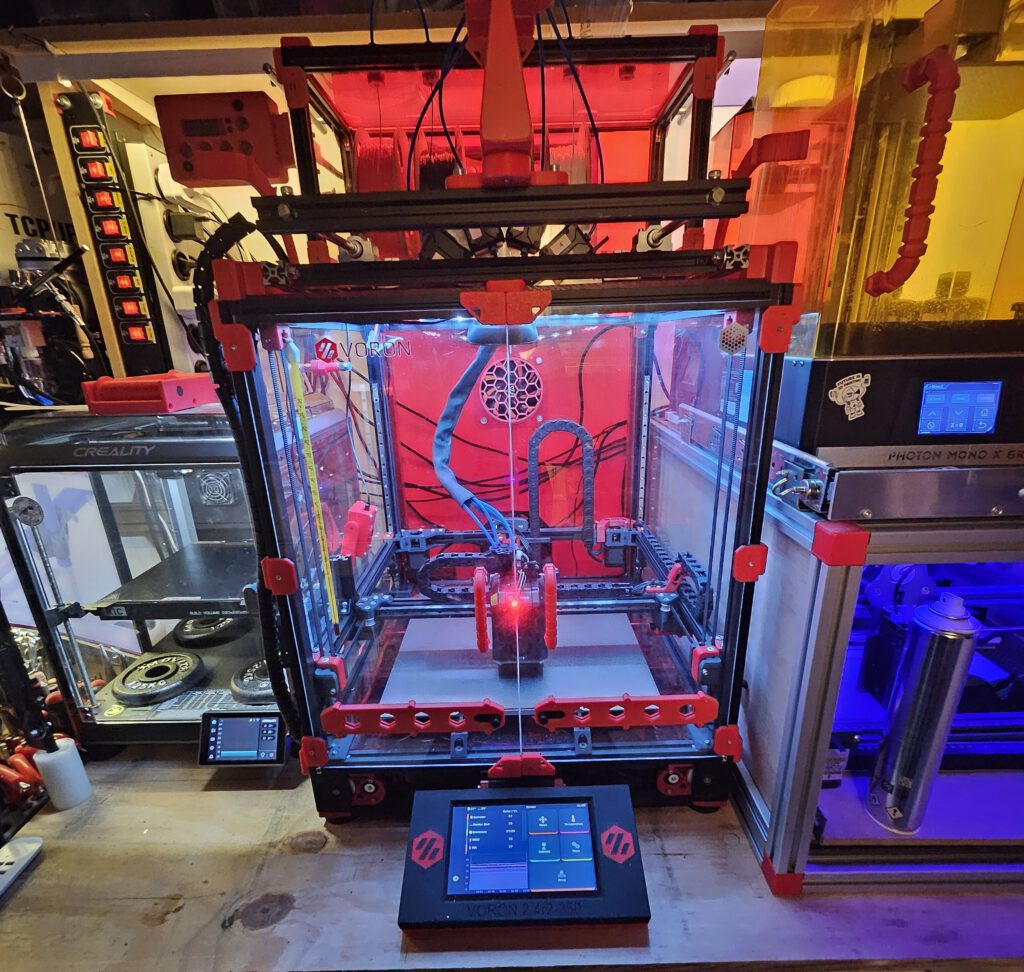
Built, Not Bought
One of the centerpieces is a heavily modified Voron 2.4 — not just assembled, but engineered.
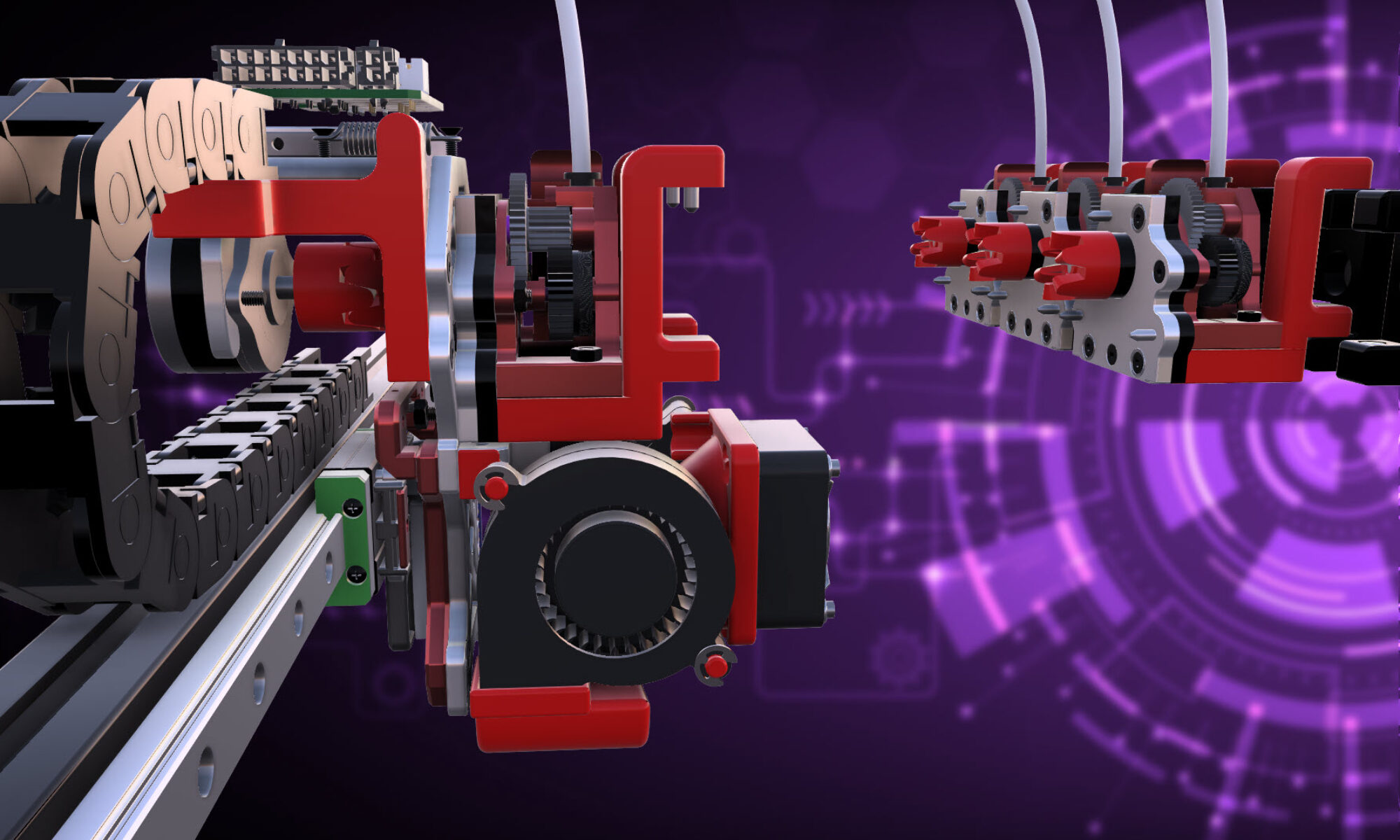
Custom (self designed and engineered) multicolour toolhead and CMS, mechanical redesigns, and ongoing experimentation push the limits of what the machine can do. It’s less a printer, more an evolving platform.
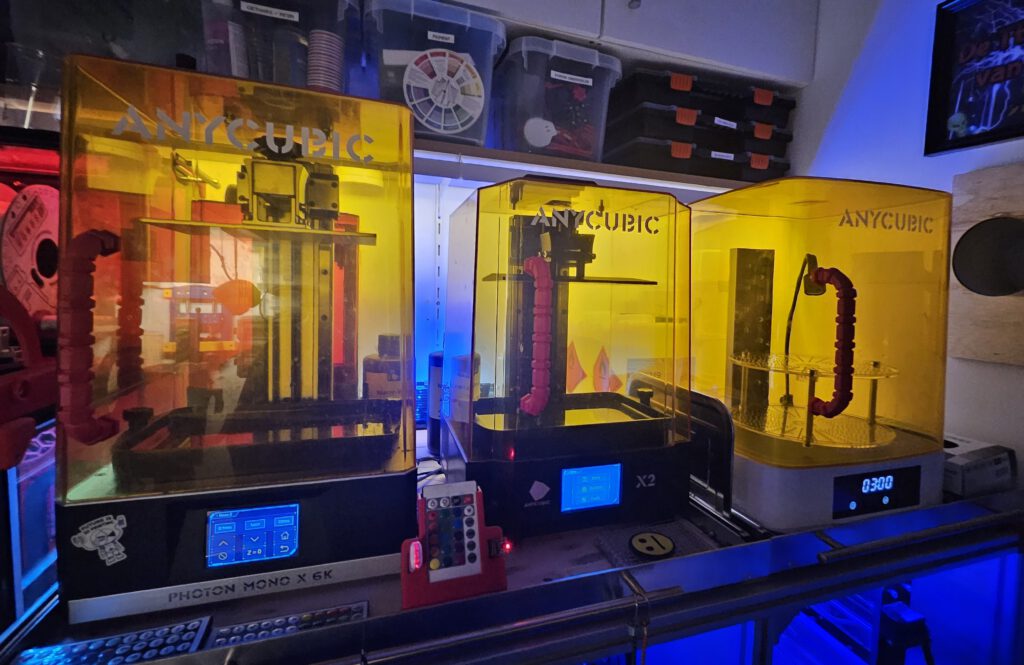
The Wet Side
High-detail work happens here.
These SLA printers trade speed for precision, producing parts that FDM simply can’t match. When surface finish and fine detail matter, this is where prints come to life — layer by microscopic layer.
The hardware zone
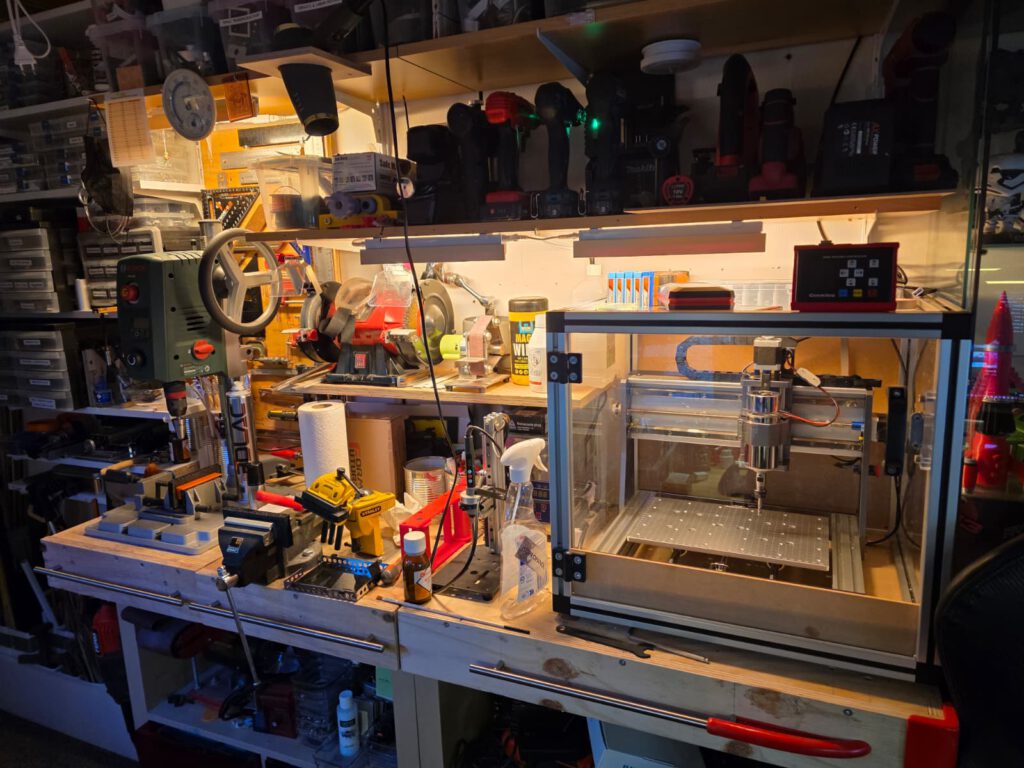
Where Things Get Built (and Sometimes Break)
Drilling, milling, cutting — this is where raw materials become parts. Precision matters here, but so does experimentation. Not everything works the first time… and that’s exactly the point.
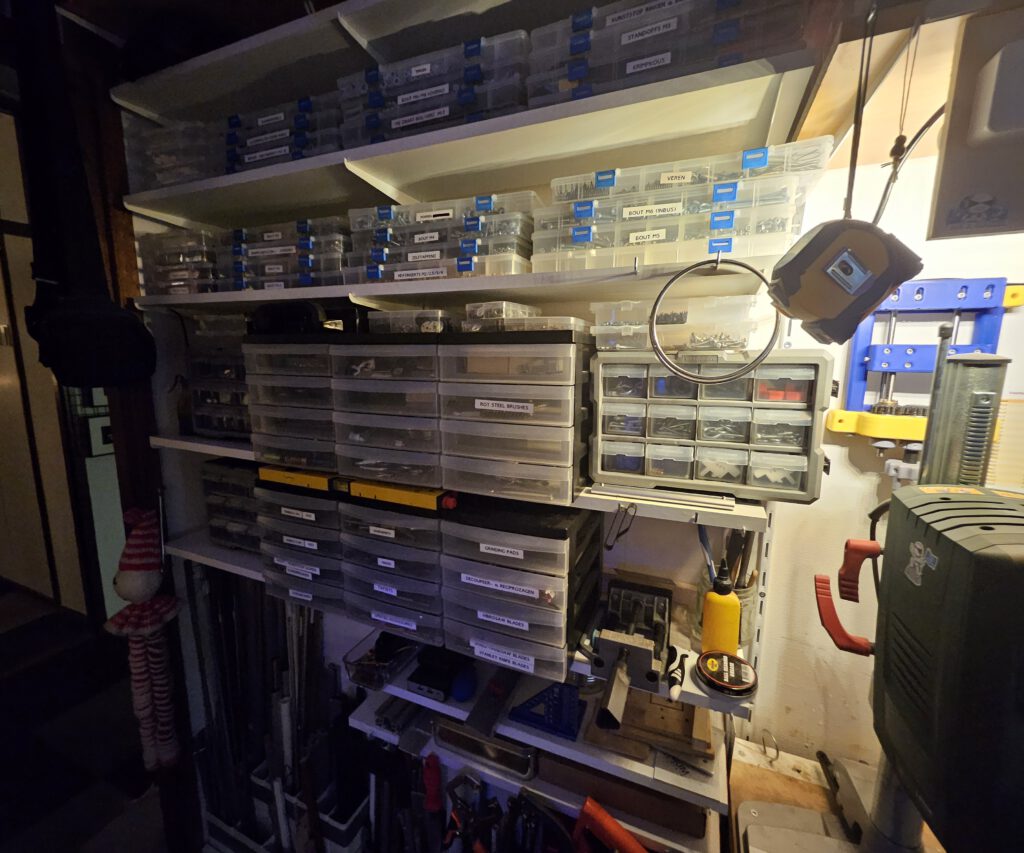
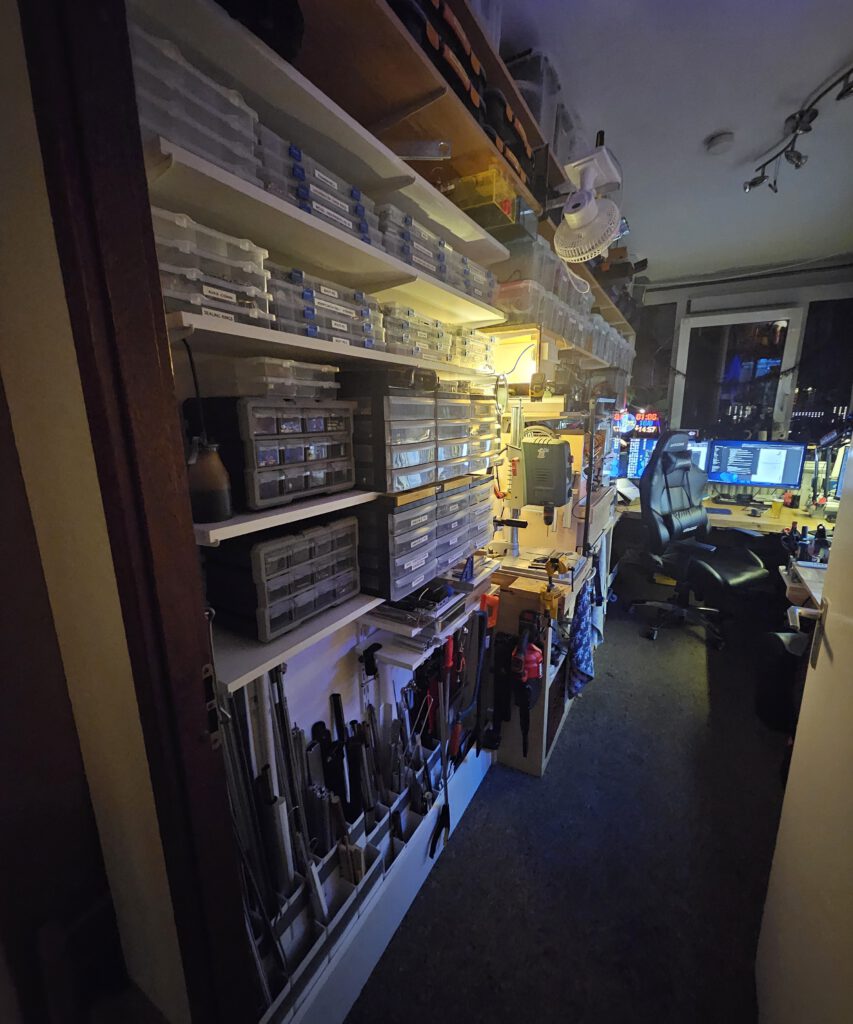
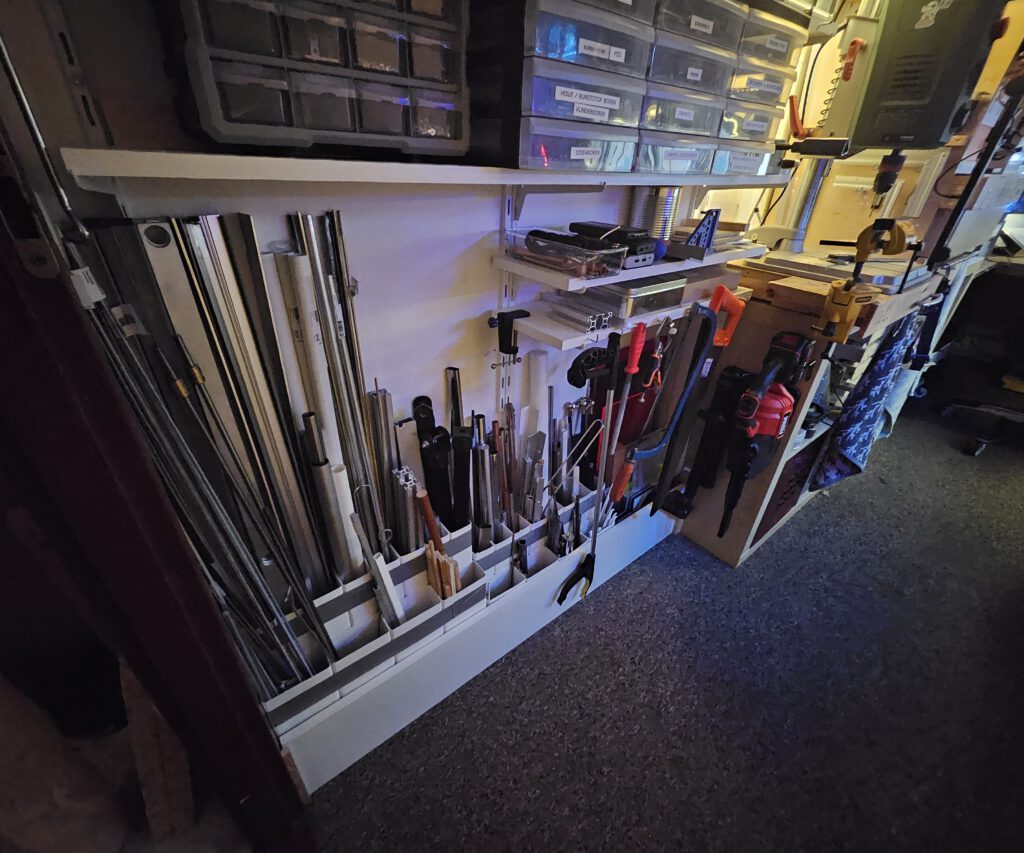
The “I Might Need This Someday” Wall
Turns out… I usually do.
What looks like overkill is actually what makes rapid building possible. No waiting, no excuses — just build.
Tools
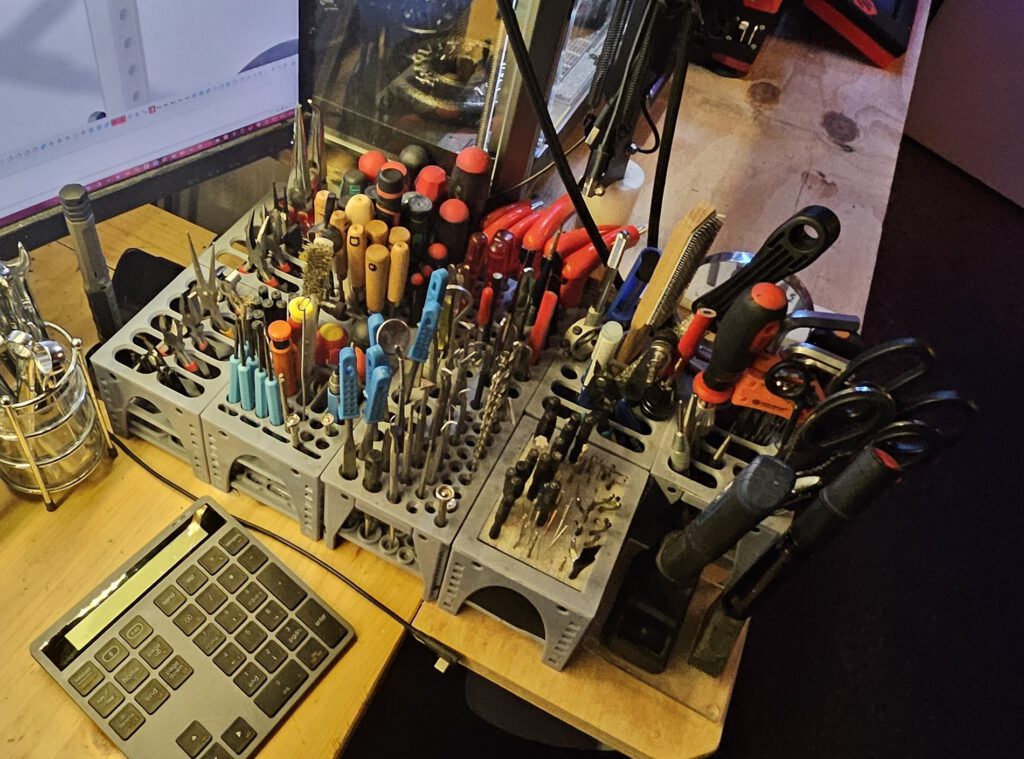
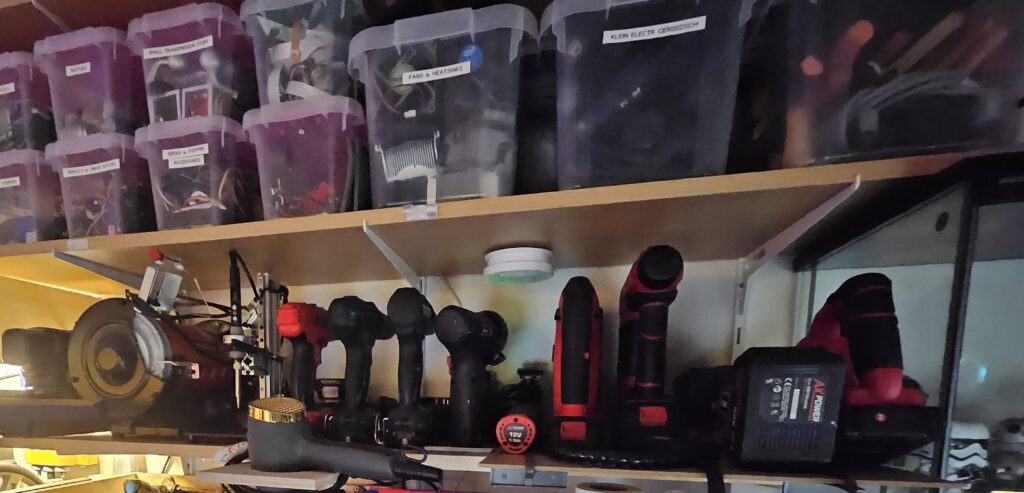
Precision on the left, power on the right.
Everything within reach — no time wasted searching, just building.
Why This Space Exists?
I don’t buy solutions — I build them.
My makerspace is more than a room full of tools. It’s a playground for ideas, a lab for experimentation, and occasionally a battlefield between “this should work” and reality.
Tom…